LET’S MAKE SENSE OF YOUR WATER!
City of Akron Water Quality Report
Population Served: 190,000
Primary Water Source: Upper Cuyahoga River, Wendell R. LaDue Reservoir, East Branch Reservoir, Lake Rockwell
Source: City of Akron
DID YOU KNOW water quality reports, also known as “Consumer Confidence Reports (CCRs),” are annual documents that all public water systems are required to provide to you via mail and online. These reports are supposed to provide important information about the quality of the drinking water delivered over the previous year.
They can be difficult to read or understand. They are often many pages long and contain complex tables and charts. Culligan Water wants to change this and help you MAKE SENSE OF YOUR WATER.
This easy-to-read report will provide you with the following:
- Items of interest: Common water issues discussed within your community.
- Potential concerns: Unregulated contaminants that could be a health concern to you or your family.
- Water hardness: The current level of hard water in your area.
The Water Quality Report Legend:
- Health Concern Contaminants that have known health effects that the EPA regulates to protect public health.
- Aesthetic Issue Not necessarily a health risk but can affect your water’s appearance, taste, or odor.
- Unregulated Possible health risk but NO standards set by the EPA. Emerging chemicals and compounds the EPA is gathering data on.
Maximum Contaminant Level (MCL): The highest level of a contaminant that is allowed in drinking water.
Action Level (AL): The concentration of a contaminant that triggers additional action.
Public Health Goal (PHG): The level of a contaminant in drinking water that doesn’t pose a significant risk to health. PHG’s are NOT regulatory standards, and may not be attainable due to current remediation technologies.
ppm: parts per million (μg/L)
ppm: parts per billion (mg/L)
A Summary Of The Akron Water Quality Report
1) Infrastructure & Water System Overview
The Akron Water Supply Bureau operates a surface water system that delivers drinking water to more than 80,000 homes and businesses across the region. Akron’s system relies on a network of reservoirs, treatment facilities, pump stations, and storage tanks to maintain consistent pressure and water quality across varying elevations. Water is collected, treated, and distributed through an interconnected system.
The system also has emergency interconnections with nearby municipalities including Cleveland, Barberton, and Cuyahoga Falls, providing additional supply security if needed.
2) Water Sources and Usage
Akron’s drinking water comes from surface water sources, primarily the Upper Cuyahoga River, which is stored in a series of reservoirs before treatment.
- Wendell R. LaDue Reservoir
- East Branch Reservoir
- Lake Rockwell
Water from Lake Rockwell is treated and pumped into Akron’s distribution system. Because this is a surface water system, it is more susceptible to environmental factors such as rainfall, runoff, and seasonal changes compared to groundwater systems.
3) Disinfection and Water Treatment
Akron uses a multi-step treatment process designed to remove contaminants and ensure safe drinking water before distribution.
- Chlorine: Averages ~1.29 ppm
- Haloacetic Acids (HAA5): ~51.3 ppb
- Total Trihalomethanes (TTHMs): ~68 ppb
Disinfection byproducts like HAA5 and TTHMs are formed when chlorine reacts with natural organic matter in surface water. While regulated, they are still monitored due to potential long-term exposure concerns. Akron also tracks Total Organic Carbon (TOC), which averaged about 2.51 mg/L and plays a role in the formation of these byproducts.
4) Minerals and Water Quality Highlights
Akron’s water contains naturally occurring minerals that affect taste, hardness, and overall performance throughout the home.
- Fluoride: ~0.98 ppm
- Nitrate: ~0.33 ppm
- Total Dissolved Solids: Up to ~311mg/L
- Hardness (Average): ~118 mg/L (≈7 grains per gallon)
This places Akron’s water in the moderately hard category. While not a health concern, moderately hard water can:
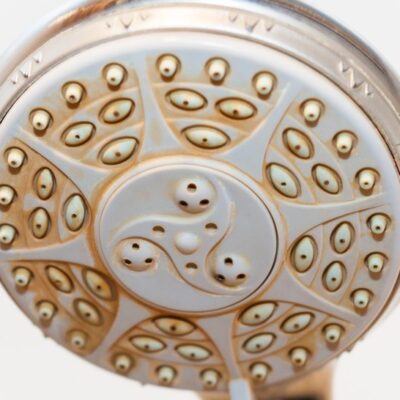
- Cause scale buildup on fixtures and appliances
- Leave spots on dishes and glassware
- Reduce the effectiveness of soaps and detergents
- Contribute to dry skin and hair
Water treatment solutions like softeners and filtration systems can help address these common issues and improve overall water quality in the home.
Items of Interest
Common Tap Water Issues in the Akron Area
The Akron region water supply is safe to drink but can still contain trace levels of certain substances that impact taste, odor, or home fixtures. Here are a few common water quality concerns found across the area.
Chlorine
EPA Max. Contaminant Level: 4.0
Public Health Goal: N/A
Concerns: Cancer, Poor Taste and Smell
Removal: Reverse Osmosis Water Filters, Whole House Water Filters
Nitrate
EPA Max. Contaminant Level: 10
Public Health Goal: 10
Concerns: Cancer, cardiovascular issues, skin lesions
Removal: Reverse Osmosis Water Filters, Whole House Water Filters
Fluoride
EPA Max. Contaminant Level: 4
Public Health Goal: 4
Concerns: Overexposure can cause dental or skeletal fluorosis
Removal: Reverse Osmosis Water Filters, Whole House Water Filters
Potential Concerns
Explore Unregulated Contaminants in Akron Area Water
Unregulated contaminants are substances that the EPA monitors but has not yet assigned enforceable limits for. Akron tests for these compounds to track potential risks and ensure long-term water safety. While levels remain below federal thresholds, these byproducts can still affect water taste, overall health, and household performance over time.
HAA5
EPA Max. Contaminant Level (MCL): 60
Public Health Goal: 0
Concerns: Cancer
Removal: Water Softeners, Whole House Water Filters
TTHM
EPA Max. Contaminant Level: 80
Public Health Goal: 0
Concerns: Cancer
Removal: Reverse Osmosis Water Filters, Whole House Water Filters
Hardness Concerns
Does Akron Have Hard Water?
Yes. Akron has moderately hard water, averaging around 118 mg/L (about 7 grains per gallon) based on recent water quality data.
Some areas may experience slight variation, but overall levels fall within the moderately hard range rather than very hard. A water softener helps reduce mineral buildup and improves overall water performance throughout the home.
Hard Water
Public Health Goal: N/A
Concerns: Dry skin/hair, scale, soap scum, mineral buildup in appliances
Removal: Water Softeners, Whole House Water Filters
Forever Chemicals
PFAS Contaminants in the Akron Area
Akron’s most recent water quality report does not include PFAS testing results. However, PFAS have become a growing concern nationwide as the EPA establishes new limits. Because Akron relies on surface water sources, monitoring for PFAS is important as environmental conditions change.
Culligan offers PFAS testing for homeowners who want more detailed insight into their water quality.
LEAD CONCERNS
Akron’s Lead Awareness Campaign
Akron takes a proactive, long-term approach to managing lead in drinking water, backed by decades of corrosion control treatment and consistent monitoring. The city’s water system has remained below the EPA action level of 15 parts per billion for lead, thanks in part to treatment processes that help prevent lead from leaching out of pipes as water moves from reservoirs like Lake Rockwell through the distribution system.
Because much of Akron’s housing stock includes older homes, the primary risk comes from customer-side plumbing, including service lines, solder, and fixtures. To address this, Akron Water continues to identify and replace city-owned lead service lines while maintaining a Service Line Inventory to help residents better understand their home’s plumbing.
Residents can reduce potential exposure by flushing cold water before use, especially after it has been sitting in pipes, and by regularly cleaning faucet aerators where particles can collect. While system-wide levels are low, testing remains the most reliable way to understand conditions inside your specific home.



Facebook